



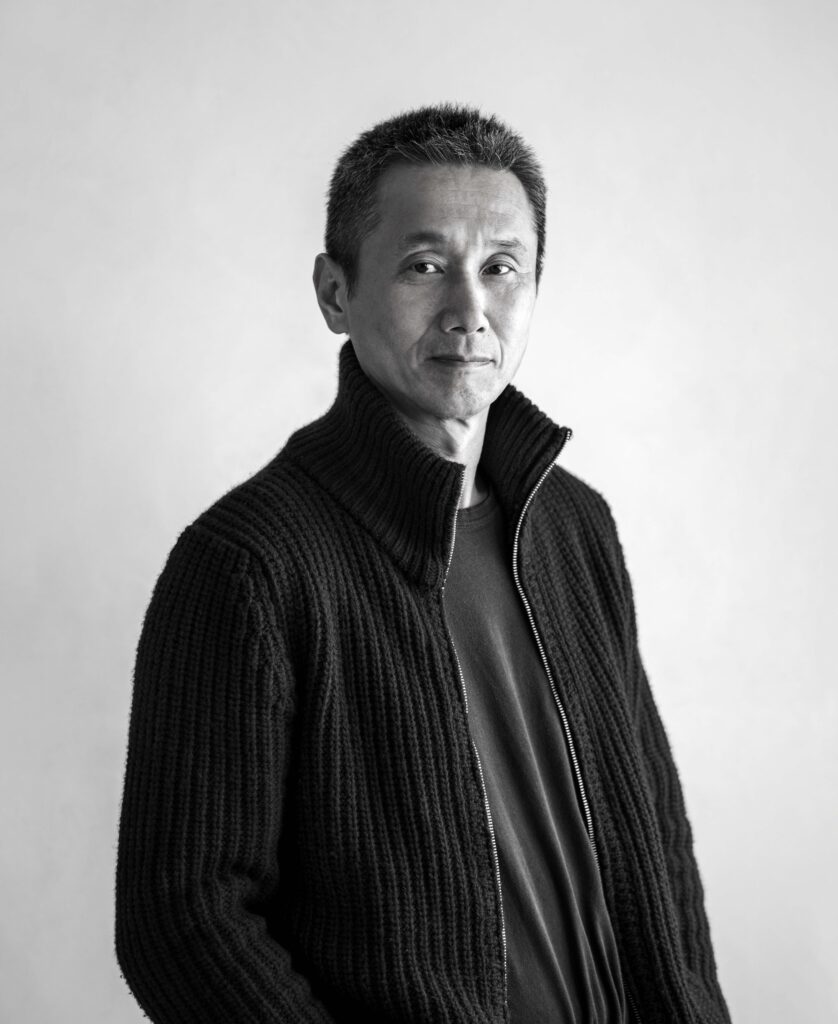
Born in 1959, Yukinori Yanagi is one of Japaneses most influential contemporary artists, despite living far from the spotlight on Momoshima, a remote island that he has transformed into an art hub. He is renowned for his site-specific installations that explore highly political themes such as national sovereignty, identity, and globalization. After studying at Musashino Art University in Tokyo, he continued his education in the United States at the Yale School of Art, where he explored the relationship between art and architecture.
Since the 1980s, Yanagi has experimented with unusual forms and materials to create works that invite reflection on the concepts of community, movement, and transformation.
In 1993, at the Venice Biennale, he presented The World Flag Ant Farm, an emblematic installation in which 180 national flags made of colored sand were slowly eroded by the incessant activity of hundreds of ants. This powerful work challenges the concept of national borders and allowed the artist became the first Japanese to win the Aperto prize at the Venice Biennale.
In 1995, he launched the Inujima project, contributing to the cultural redevelopment of the eponymous island by transforming a decommissioned copper refinery into a museum. He later founded Art Base on Momoshima, where he now lives. This art center, created from the ruins of an old school and a 1950s cinema, promotes a new vision of art within the community.
In recent years, Yanagi has exhibited at prestigious international events, including the Sydney Biennale (2018), the exhibition Psychic Wounds: On Art & Trauma in Dallas (2020), and two solo exhibitions in Tokyo and Los Angeles (2021). He is currently working on the creation of a floating museum on Ansa Island in South Korea.
Wakapedia’s Point of View
After months abroad in Milan, homesickness set in and we missed that unmistakable mix of Zen aesthetics, minimalist refinement, and the scent of dashi broth. But just when the pull became unbearable—boom!—a surprise arrived that made our eyes sparkle and our Made in Japan hearts beat faster. We didn’t have to take a flight after all!
We discover that Yukinori Yanagi, one of our favorite Japanese artists, had just inaugurated ICARUS, his first European retrospective on the outskirts of Milan, at the Pirelli HangarBicocca (from March 27th to July 27th, 2025). The last time he exhibited in Italy was More than thirty years ago, at the Venice Biennale. Almost before we were born!
We couldn’t miss this retrospective, especially considering the wave of emotions that had overwhelmed us during our visit to his museum on the island of Inujima. Filled with vibrant colors, political symbols, and sharp irony capable of dismantling the great taboos of history, we still get chills just thinking about it. So, without thinking twice, we set off for the Pirelli HangarBicocca to relive that same magic.
 As soon as we entered, the spell was broken by a kilometer-long line to see one of Yanagi’s major works. It felt like Black Friday at La Rinascente! But the real surprise? No one was shouting or complaining. The artist’s Zen spirit seemed to have miraculously permeated the Italian public. The same people who usually jostle at the airport gate, huff and puff at the post office, or swear behind the wheel stood patient and composed, silently waiting their turn.
Once inside the dimly lit exhibition, we felt transported to another dimension—the classic Yanagi effect. Subtle neon lights and thin rays of sunlight filtering through the buildings enveloped the vast space of the HangarBicocca in a surreal atmosphere. The recurring use of red and white, evoking Japan’s emblematic Rising Sun, reinforced this sense of entering a different cultural sphere.
We recognized him instantly not only because he was the only Japanese person in the room, but because of his magnetic presence. His aura seemed to be part of the installation itself. With an intense gaze, innate charisma, and the perfect combination of elegance and nonconformity, Yanagi captivated us even before he even spoke. The emotion we felt? That of finding ourselves in the presence of an icon. For us, Yanagi is the David Bowie of contemporary art.
Awestruck, we finally found the courage to approach him and even conduct an interview. The moments we spent together were almost suspended in time and charged with energy. Putting it all down on paper wasn’t easy, but we tried.
Enjoy the read!
Wakapedia: Yanagi-san, it is an honor to meet you! Thank you for taking the time to speak with us, despite the incredible turnout. We know you are very busy, so let’s get straight to the point! Your works often play with iconic elements of Japanese pop culture that marked our childhood, such as Godzilla and Ultraman. Tell us, what was your childhood like?
Yukinori Yanagi: Hmm… I was a mischievous child! I was always being scolded and often received letters of reprimand from school. Rather than studying, I preferred to run around in the fields and play in nature. From an early age, I had a special connection with insects, animals, fire, water, and the earth—elements that later became an integral part of my artistic language. As I grew up, this language collided with the concepts of borders, nations, and history, and I began to explore these themes in my work.
Wakapedia: So, your wild spirit was fundamental to your artistic development! That means that even we, who were always on a mission to collect earthworms as children, were destined to love art! (Laughs)
All joking aside, your curiosity naturally led you to explore the world. Your first big step was to move to the United States and study at Yale University. How did this experience impact your education?
Yukinori Yanagi: At the Yale School of Art, art and architecture were on the same level, and this made me realize how interconnected they were. In particular, I was fortunate enough to attend Frank Gehry’s classes and see great artists and architects collaborating with each other. It was enlightening and very useful to me later on. I believe that artists should think carefully about the spaces and environments in which their works come to life, and that architects should not treat art as mere decoration.
Wakapedia: Wow! Frank Gehry—the visionary architect who designed the Guggenheim in Bilbao and also the (iconic, though not really our taste) Louis Vuitton Foundation?! After you, of course, he’s one of the people we’d love to meet! (Laughs) His architecture encourages us to reflect on the profound connection between art and the space it inhabits. It’s a feeling we also find in your exhibition ICARUS. Why did you choose this title?
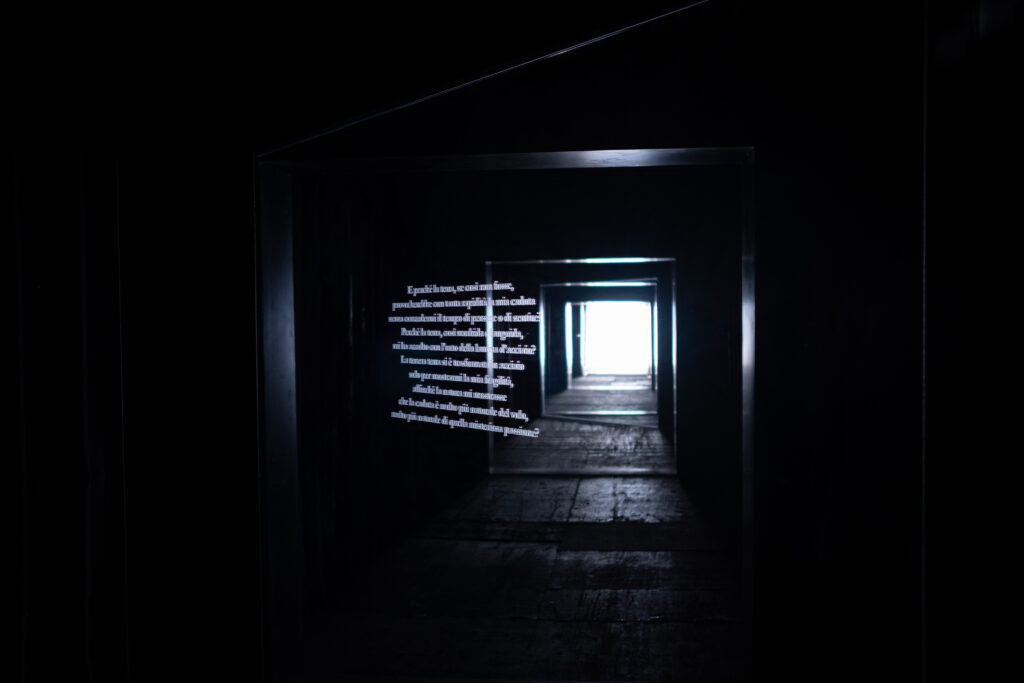
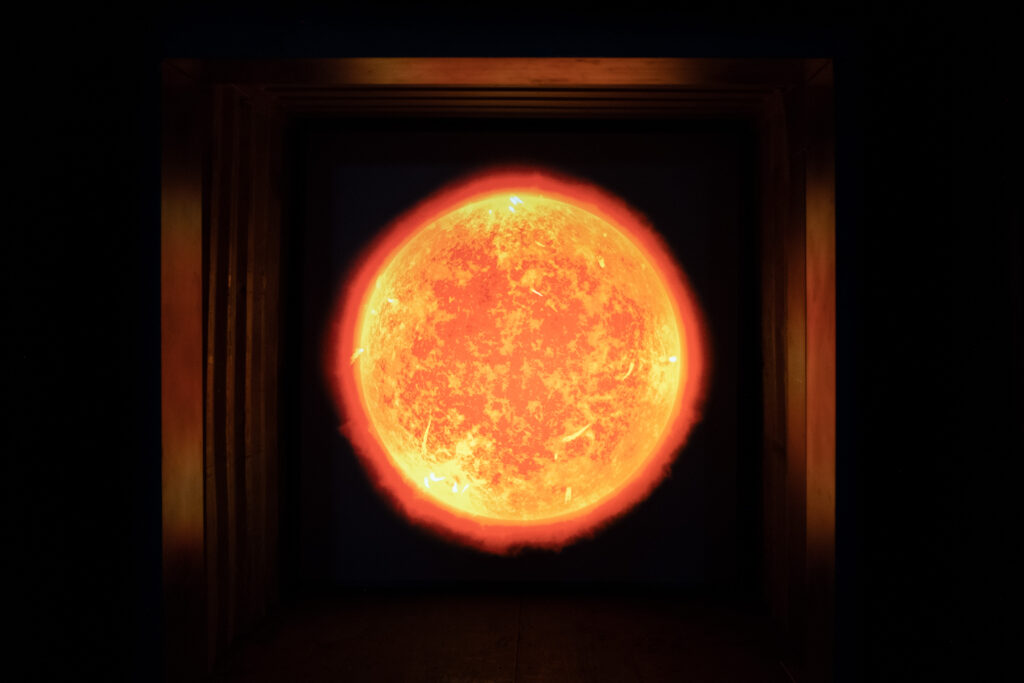
Yukinori Yanagi: The title ICARUS comes from the Greek myth of Icarus, the young man who flew too close to the sun with wax wings and fell into the sea.
Wakapedia: A powerful warning! Man cannot dominate nature, and any attempt to do so has consequences. It’s a recurring theme that runs through history from ancient times to the present day, right up to the debate on the limits of technology and AI. A very apt title, in fact, but Icarus would also be a nice name for a water Pokémon, don’t you think? (Laughs) Now that we think about it, it’s also the title of a work we saw in your museum on Inujima island. Icarus Cell (2008), right?
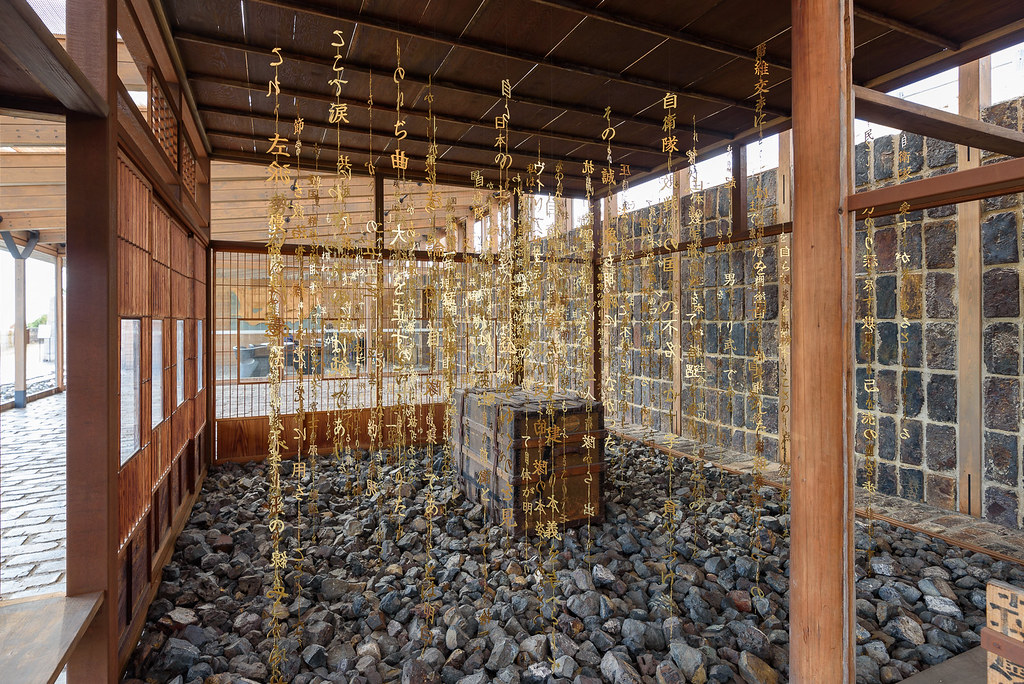
Yukinori Yanagi: Exactly! In my work on Inujima, I combined the philosophy of the Japanese writer Yukio Mishima—the search for the ideal and the sacrifice to achieve it—with the myth of Icarus. One of Mishima’s texts was particularly inspiring. “The Sun and Steel” (1968), is a poem written about flying in a military aircraft. I’m very interested in the relationship between the past and industrial history. Inujima was once an industrial center, but today it’s a place of art and cultural rebirth, where history, architecture, and contemporary works merge to create new meanings.
Wakapedia: What motivated you to exhibit here in Italy after so long? Why this exhibition at Pirelli HangarBicocca?
Yukinori Yanagi: When I saw the Pirelli HangarBicocca space, I felt the same energy I had felt in Inujima—that of an industrial place transformed by art. HangarBicocca was a metalworking factory that has been reconverted into an exhibition center. These places speak to me; the concept of Genius Loci (the spirit of the place) was fundamental in creating my exhibition here.
Wakapedia: Indeed, the Pirelli HangarBicocca seems perfect for your art! How did you develop the exhibition, and can you tell us about some of the works on display?
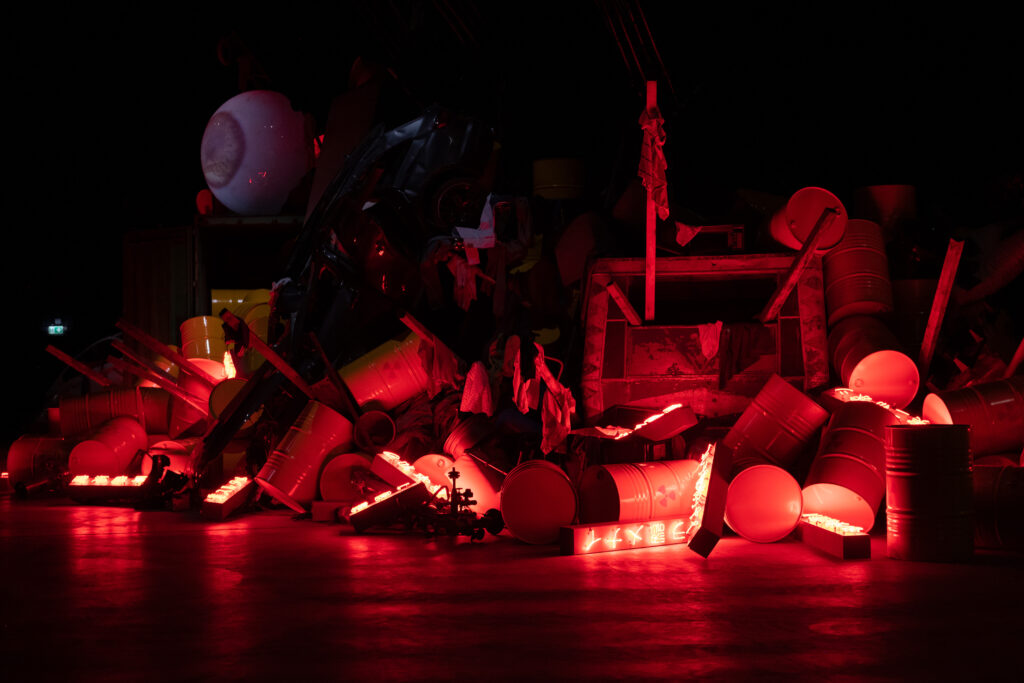
Yukinori Yanagi: For ICARUS, I was interested in the technological progress that led to war, culminating in the use of the atomic bomb. This tragedy recalls the fate of Icarus, who flew too close to the sun and fell.
For example, in Project God-zilla 2025 – The Revenant from ‘El Mare Pacificum’, Godzilla’s eyes reflect images of nuclear tests and mushroom clouds, evoking memories of the post-war period. Humanity must ask itself how to use technology, listening to the silent voices of the dead. The living tell the story, but it is the dead who really have something to say.
Article 9 is a floor installation consisting of multiple beams with red neon Japanese characters that jumble the infamous Article 9 clause of the Japanese Constitution, which renounces war. It is a work that questions national memory and the legitimacy of power.
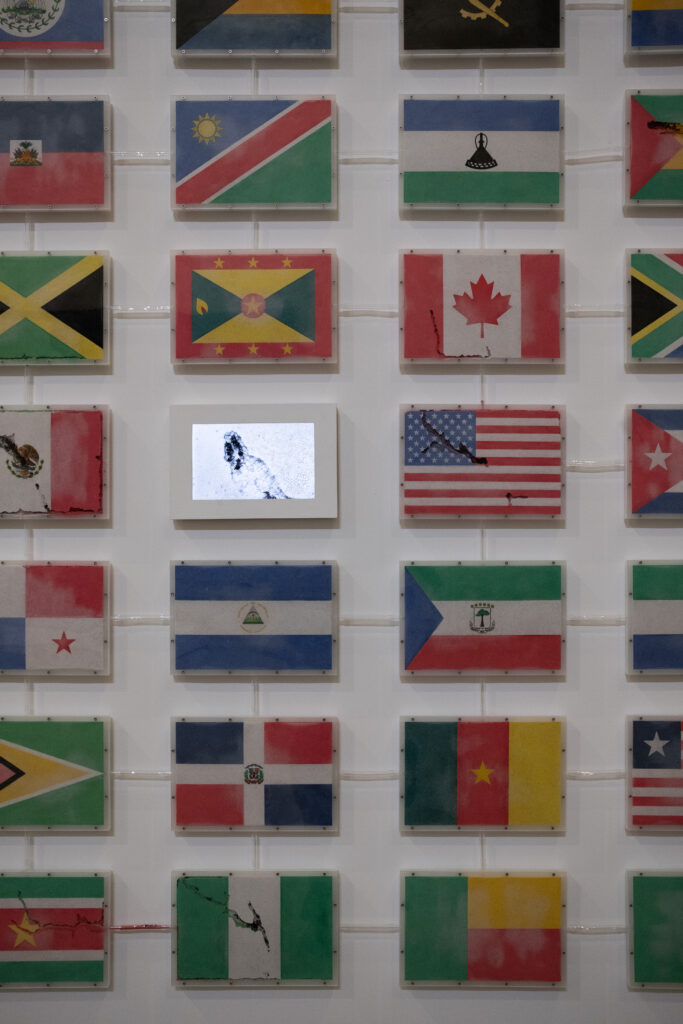 In The World Flag Ant Farm, dozens of national flags made of acrylic panels filled with sand are connected by plastic tubes traversed by dozens of ants. This work is symbol of the fluidity of national identities and the fragility of the concept of borders.
Wakapedia: It’s true, today we live in a globalized world, and we often forget the tragedies of the past. In Japan, but also elsewhere, young people have not experienced war and are turning away from politics, so your message is more important than ever. Do you think art has a social role?
Yukinori Yanagi: I think art is essential for broadening our perspective on the world, for putting our position into perspective and changing our opinions.
The concept of “Wandering Position” is important in my works and stems from observing ants moving tirelessly. In my work, I chase ants, but they don’t notice me. At the same time, I am being chased by a larger system.
Wakapedia: Last question: What is art, with a capital A, for you?
Yukinori Yanagi: As a child, I dreamed of being an explorer, inspired by Jacques-Yves Cousteau and his ship Calypso. As a young man, I was fascinated by Che Guevara. To me, Art is an extension of these dreams—it is a means to discover, challenge, and transform the world.
Wakapedia: Art may seem complex, but perhaps it is simply the manifestation of our childhood curiosity and passion. Thank you very much, Yanagi-san!
This conversation truly enriched us. We left the exhibition with our heads full of thoughts and our hearts full of emotions. As we walked past the grass, a small earthworm wriggled at our feet. Without thinking, we picked it up and put it in our pocket, just like we used to do as children.

Description & Interview: Sara Waka
Edited by: Kassandra Frua De Angeli

